

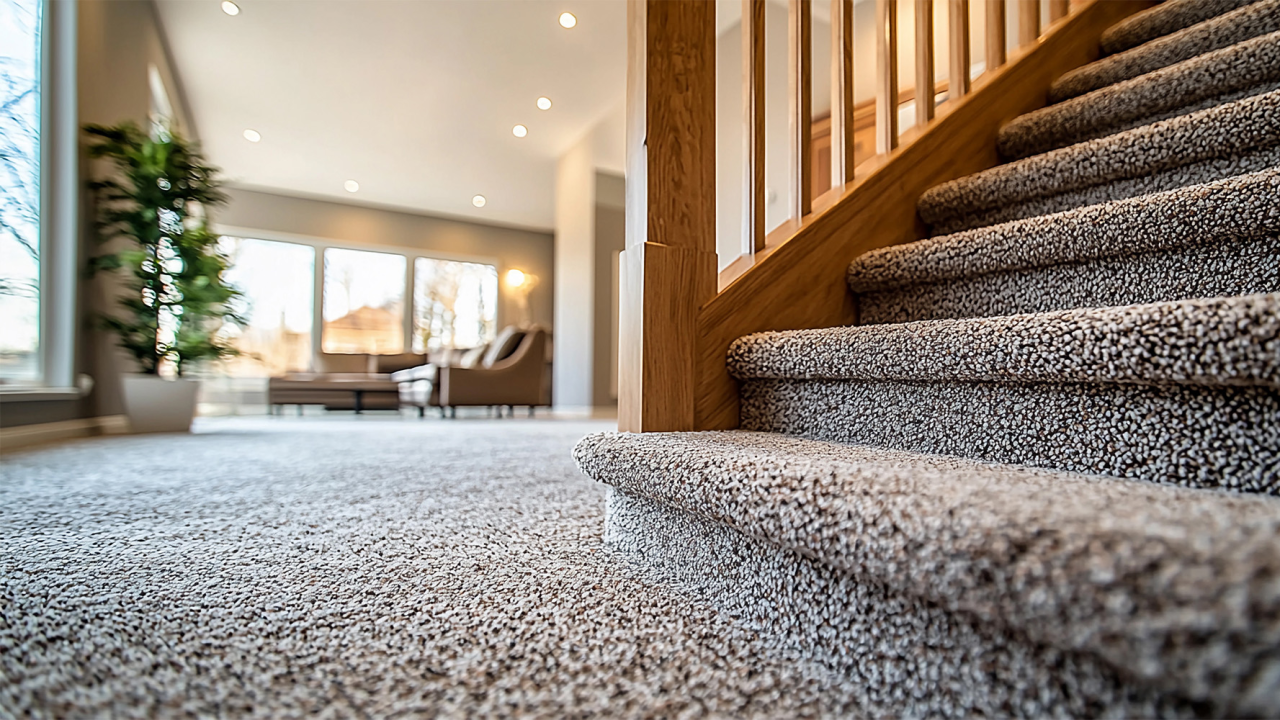
Staircases and connecting hallways are often among the most heavily used areas in any home. Far from being simple transitional spaces, steps and corridors offer a fantastic opportunity to make an intentional interior design statement. Installing custom stair runners and matching hallway rugs adds rich color and texture while improving comfort, safety, and sound absorption throughout your home.
The Functional Power of a Quality Runner
Staircases take a beating from daily foot traffic. Hardwood steps, while beautiful, are prone to scuffs, wear along the front tread edges, and slipperiness under socked feet.
Adding a custom runner delivers major functional advantages:
Enhanced Safety and Grip: A secure fabric runner offers essential traction for children, elderly family members, and pets navigating steps.
Noise Reduction: Hardwood and hard-surface steps amplify footsteps throughout the house. A plush, padded runner absorbs impact noise, creating a quieter environment.
Surface Protection: Covering the center of each tread shields the wood finish underneath from shoe wear, dirt abrasion, and pet claws.
Designing Seamless Continuity Between Spaces
One of the biggest advantages of custom fabrication is the ability to unify distinct areas of your home. A staircase rarely exists in isolation; it usually connects an entryway, foyer, or upstairs landing.
To achieve visual harmony:
Match Hallway Runners to Steps: Fabricating hallway runners using the same carpet roll or complementary patterns creates an integrated look across multiple levels.
Border and Binding Customization: Custom edging—such as wide cotton flat-weave binding, leather borders, or hand-serged edges—adds a tailored finish that anchors the carpet visually.
Proportion and Fit: Unlike off-the-rack rugs, custom runners are cut to precise widths, leaving equal, clean margins of exposed hardwood along both sides of your stairs and hallways.
Choosing Patterns, Textures, and Materials
Because stair treads endure continuous foot pressure, selecting the right texture and pattern is key to long-term satisfaction.
Pattern Choices: Subtle geometric patterns, classic herringbone, or soft pinstripes add visual movement without overwhelming the space. Vertical stripes can make staircases appear longer and more dramatic, while small-scale patterns disguise minor dirt between cleanings.
Low-Pile Efficiency: Dense, low-pile carpets or loop constructions (like wool berber or tight nylon weaves) perform best on stairs. Deep, plush shags should be avoided on steps as they flatten unevenly and pose tripping risks.
Fiber Selection: Wool remains a top choice for stair runners due to its natural bounce-back memory, while high-grade nylon offers unbeatable stain resistance and resilience in busy households.
Precision Installation Makes the Difference
A stunning runner relies heavily on expert measuring and professional installation. Staircases often feature turns, landings, pie-shaped treads, or decorative bottom risers that demand expert fitting techniques.
Proper installation methods:
Waterfall Style: The runner flows continuously over the edge of the tread straight down to the next step, creating a sleek, clean visual line.
Cap-and-Band Style: The carpet is fitted snugly against both the tread edge and the vertical riser underneath, highlighting architectural trim and traditional woodworking.
Underlayment: A high-density, low-profile carpet pad underneath the runner is essential to ensure comfort, prevent slipping, and extend carpet life.
Investing in a custom runner transforms ordinary stairs and corridors into cohesive, elegant features that welcome guests and protect your home's surfaces for years.

