

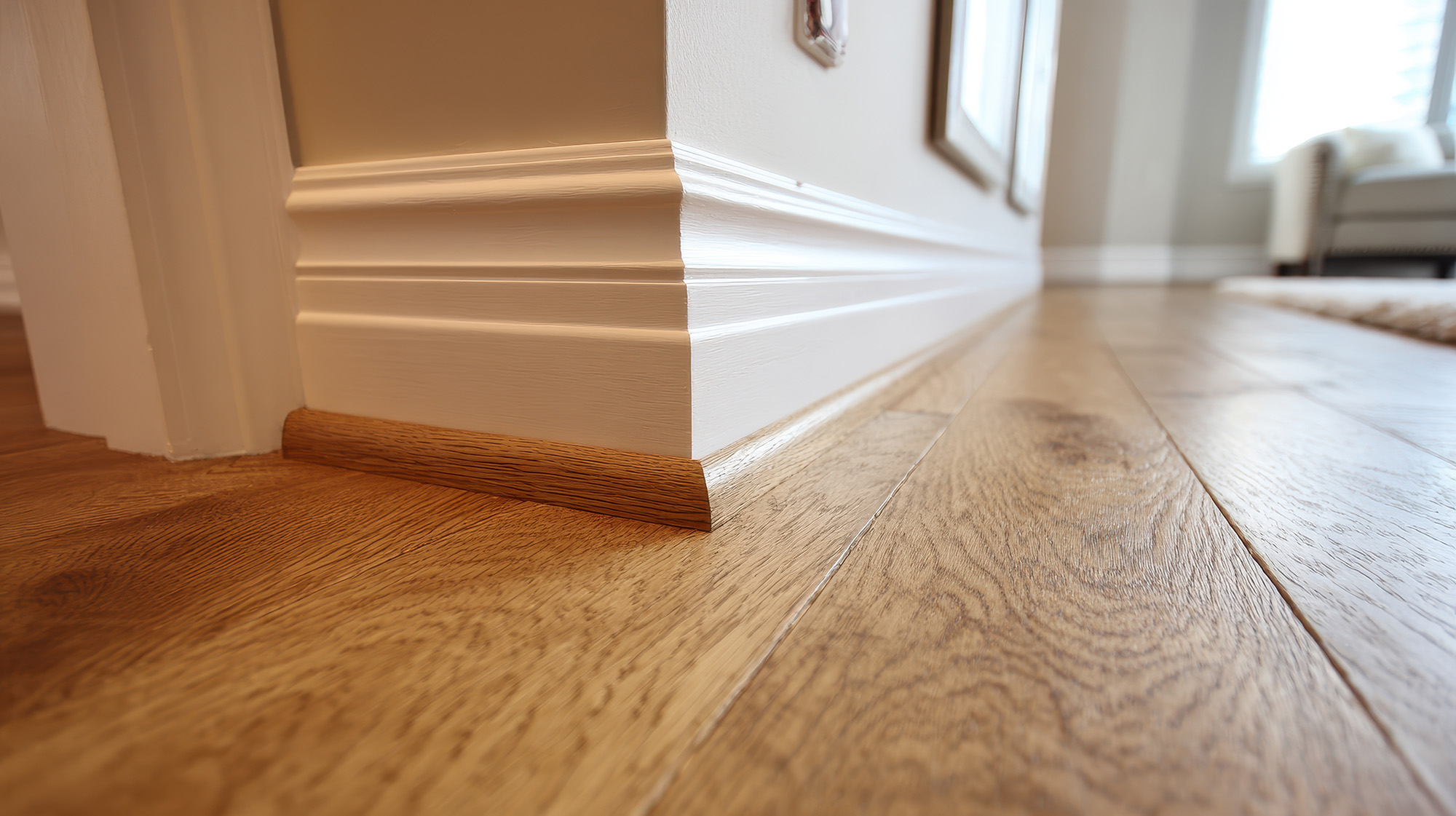
Hardwood flooring remains the benchmark for timeless interior design. Its rich warmth, organic grain variations, and long-lasting appeal add genuine character and financial value to any home. However, when selecting wood flooring, homeowners quickly face a fundamental decision: Should you choose solid hardwood or engineered hardwood?
While both options feature 100% real wood on the surface, their core constructions are vastly different. Understanding how each handles moisture, daily wear, subfloor conditions, and long-term maintenance will help you pick the right choice for your lifestyle.
Understanding Solid Hardwood
Solid hardwood is precisely what its name implies—a single, solid piece of timber milled directly from a tree trunk, usually 3/4-inch thick.
Because it is solid timber throughout, this type of flooring can be sanded down and refinished multiple times over its lifespan. A quality solid hardwood floor can easily last a century or more, changing stains and finishes across generations.
Advantages of Solid Hardwood:
Exceptional Longevity: Can be refinished 3 to 5+ times over its lifetime to eliminate deep scratches, color changes, or structural wear.
Authentic Value: Adds long-term resale value and classic architectural appeal to traditional and contemporary homes.
Customization: Available in pre-finished planks or job-site finished options, giving you full control over custom stains and protective topcoats.
Limitations:
Solid wood expands and contracts significantly in response to changes in environmental humidity and temperature. In dry winter months, planks may shrink slightly, creating tiny visible gaps. In humid summer months, planks expand, which can lead to cupping or crowning if moisture is not properly controlled. Consequently, solid hardwood is not recommended for basements, concrete slabs, or environments with extreme humidity swings.
Demystifying Engineered Hardwood
Engineered hardwood is not a laminate or synthetic material—it is 100% genuine wood built with an advanced multi-ply core structure.
The top layer (known as the wear layer or lamella) is made of real hardwood, such as Oak, Maple, or Walnut. Beneath this wear layer sit multiple cross-banded layers of premium plywood or high-density core board, glued under extreme pressure with the grain of each layer running in opposing directions.
Advantages of Engineered Hardwood:
Superior Dimensional Stability: The cross-ply core counteracts wood’s natural tendency to expand and contract. This makes engineered hardwood far less susceptible to warping, cupping, or gapping when humidity fluctuates.
Flexible Installation: Can be installed over concrete slabs, over radiant heating systems, and in below-grade spaces like finished basements where solid wood cannot go.
Wider Plank Capabilities: Because of its structural stability, engineered wood allows for much wider and longer plank formats (7 to 10+ inches wide) without risking stability issues.
Limitations:
Engineered hardwood cannot be refinished as many times as solid hardwood. Depending on the thickness of the top real-wood layer (ranging from 1mm to 6mm), it can typically be sanded and refinished 1 to 3 times, or simply recoated rather than fully sanded down.
Evaluating Your Lifestyle and Home Environment
When choosing between solid and engineered hardwood, consider these three practical factors:
Where Is It Being Installed? If you are installing flooring on a concrete slab, over radiant heat, or below ground level, engineered hardwood is the clear choice. For main-level or upper-level wood subfloors with stable indoor humidity control, solid wood remains a strong candidate.
What Is Your Local Climate? If you live in an area with dry winters and humid summers, engineered hardwood offers built-in insurance against seasonal gapping and cupping.
What Are Your Long-Term Goals? If you view your home as a long-term family asset that you want to sand down and restain every few decades to match evolving trends, solid hardwood provides that ultimate lifespan. If you want modern wide planks, stability, and immediate versatility across all levels of your home, engineered wood is ideal.
Both options offer real wood beauty and quality performance when chosen correctly for your home's conditions.

